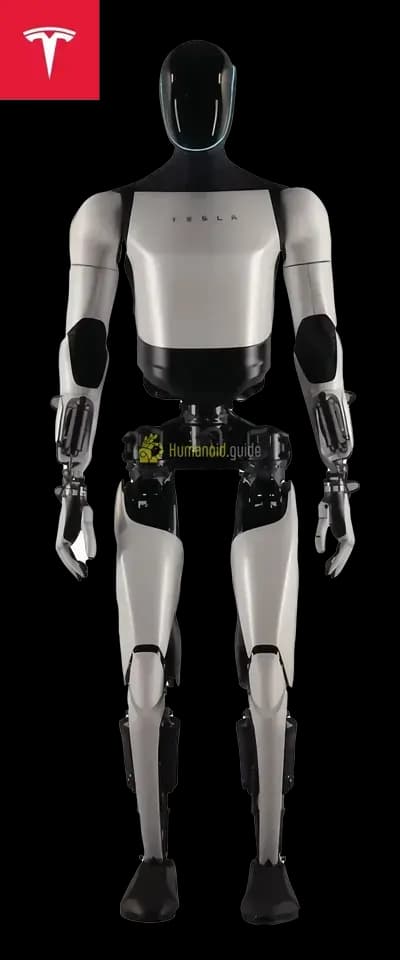
Bild: Wikimedia Commons (public domain)
In Entwicklung🇺🇸 USA
Optimus Gen 2
von Tesla · humanoid · Angekündigt 2022
$20,000–$30,000 target at scale; not for sale, no MSRP. Optimus V3 not unveiled as of Sep 2026; Fremont line being installed, production expected later in 2026 (Q2 2026 update)
Tesla's bipedal humanoid designed for autonomous factory tasks, leveraging FSD neural networks and manufactured entirely in-house.
Überblick
Der Optimus Gen 2 ist ein humanoid, entwickelt von Tesla (USA), erstmals angekündigt 2022. Er befindet sich derzeit in Entwicklung. Mit 168 cm Höhe, 57 kg Gewicht, 28 Freiheitsgraden kann Nutzlasten bis 20 kg tragen. Leistungsmerkmale: Höchstgeschwindigkeit 2.2 m/s, Akkulaufzeit 480 Minuten, 2300-Wh-Akku. Die Plattform bietet Tesla FSD custom SoC-Prozessor, ausgestattet mit 8x cameras (Autopilot-heritage), tactile fingertip sensors, force/torque joints, IMU.
Optimus Gen 2 — use cases
Sortierung von Batteriezellen im Tesla-Werk Fremont
Tesla hat gezeigt, wie Optimus Gen 2 im Werk Fremont 4680-Batteriezellen in Trays sortiert. Die Aufgabe nutzt die Hände mit 11 Freiheitsgraden und taktile Fingerkuppensensoren, um die Ausrichtung der Zellen zu erkennen. Taktzeiten oder Genauigkeitswerte hat Tesla nicht veröffentlicht, beschrieb den Ablauf aber in der Telefonkonferenz zum dritten Quartal 2024 und in späteren Videos.
Teilehandhabung an der Cybertruck-Linie
Das Enthüllungsvideo vom Dezember 2023 zeigte Gen 2 beim Gang durch den Cybertruck-Fertigungsbereich in Fremont. Berichtete Aufgaben sind das Bewegen kleiner Bauteile zwischen Stationen sowie Einlagerungsarbeiten. Die angegebene Nutzlast von 20 kg (Tesla-Wert) deckt den Großteil des linienseitigen Kleinteiletransports ab, nicht jedoch Antriebsbaugruppen und komplette Batteriepakete.
Qualitätsprüfung von Strukturgussteilen
Mehrere Tesla-Videos aus dem Jahr 2025 zeigten Gen-2-Einheiten neben Megacastings, wo die acht vom Autopilot abgeleiteten Kameras Sichtprüfroutinen ausführen. Der Durchsatz pro Schicht wurde nicht offengelegt, und Tesla hat nicht erklärt, ob menschliche Prüfer die Ergebnisse weiterhin verifizieren.
Gym- und Balance-Demonstrationen
Tesla veröffentlichte Aufnahmen, in denen Gen 2 kontrolliert tief in die Kniebeuge geht und ein Ei anhebt, ohne die Schale zu zerbrechen. Das sind inszenierte Demos, keine Produktionsabläufe. Sie zeigen die drehmomentgeregelten Aktuatoren und die gegliederten Finger, nicht den kommerziellen Einsatz.
Interne Datensammlung für das Gen-3-Training
Zur Telefonkonferenz für das vierte Quartal 2025 (28. Januar 2026) meldete Tesla rund 300 in eigenen Werken eingesetzte Optimus-Einheiten. Elon Musk bezeichnete diese Flotte als Lernphase: Die Roboter erzeugen Teleoperationsspuren und Fehlerprotokolle autonomer Läufe, die in den Gen-3-Trainingsstack fließen. Nach Teslas eigener Darstellung erbringen sie noch keine produktive Arbeit auf serienreifem Zuverlässigkeitsniveau.
Version history
Optimus Gen 1 (Prototyp Bumble C) — 30. September 2022
Tesla stellte den ersten laufenden Prototyp am AI Day 2 vor. In frühen Demos steckten Standardaktuatoren, die Tesla-Eigenentwicklung wurde statisch gezeigt. Das Gewicht lag bei etwa 73 kg. Der Roboter lief auf der Bühne einige Minuten ohne Unterstützung.
Optimus Gen 2 — 12. Dezember 2023
Vollständig von Tesla entwickelter Aktuatorsatz, 10 kg leichter als Gen 1, 30 Prozent schnelleres Gangbild, Hände mit 11 statt zuvor 6 Freiheitsgraden, aktiv bewegter Hals mit 2 Freiheitsgraden, gegliederte Zehenpartien und taktile Fingerkuppensensoren. Das Kamerasystem mit acht Kameras übernimmt Teile der Autopilot-Bildverarbeitung.
Überarbeitete Gen-2-Hand ("v2.5") — Mitte 2024 (Tesla hat kein genaues Datum genannt)
Tesla zeigte Mitte 2024 eine überarbeitete Hand mit 22 statt 11 Freiheitsgraden. Die verbesserte Hand erschien zunächst auf internen Demo-Einheiten und ging anschließend in die Gen-3-Serienspezifikation ein.
Optimus Gen 3 — Produktionsstart am 21. Januar 2026 in Fremont
Teslas erste auf Serienfertigung ausgelegte Konstruktion. Nach dem Bericht zum vierten Quartal 2025 wurden rund 300 Einheiten gebaut, überwiegend für internes Lernen. Ein vollständiges Gen-3-Datenblatt hat Tesla nicht veröffentlicht. Öffentliche Aussagen nennen Hände mit mehr Freiheitsgraden, ein neu ausgelegtes Aktuatorpaket und aktualisierte, vom FSD abgeleitete Rechenhardware. Laut Musks Zahlen von der CES 2025 liegt das Ziel für Ende 2026 bei 50.000 bis 100.000 Einheiten.
Deployment evidence
Tesla Fremont, Kalifornien
Der erste dokumentierte Einsatzort von Optimus. Seit Mitte 2024 gehören Batteriezellensortierung, Teilehandhabung und die Qualitätsprüfung von Gussteilen zu den Aufgaben. Seit Januar 2026 ist Fremont zudem Produktionsstandort der Gen-3-Einheiten.
Source: Tesla-Kommentare zu den Quartalszahlen Q3 2024 und Q4 2025
Tesla Giga Texas, Austin
Seit 2024 der zweite Einsatzort. In Tesla-Videos wurde derselbe Aufgabenmix wie in Fremont gezeigt. In Giga Texas ist außerdem eine eigene Optimus-Fertigung mit einem Ziel von 10 Millionen Einheiten pro Jahr geplant; laut Teslas öffentlichen Aussagen sollen die ersten Linien 2027 anlaufen.
Source: Tesla-Investorenunterlagen, 2025
Externe Kunden
Tesla hat keine Auslieferung von Gen 2 an externe Kunden offengelegt. Der Roboter bleibt eine interne Flotte. Die früheste von Tesla genannte externe Verfügbarkeit ist der Verkauf an Endkunden gegen Ende 2027, gekoppelt an Hardware auf Gen-3-Basis.
Known limitations
Geschlossene Softwareplattform
Optimus läuft auf Teslas proprietärem Stack. Es gibt weder ROS- noch ROS-2-Unterstützung, kein veröffentlichtes SDK und kein Ökosystem für Anwendungen von Drittanbietern. Forschende und Integratoren, die humanoides Verhalten erweitern wollen, weichen auf Plattformen wie Unitree H1 oder Boston Dynamics Atlas Research aus.
Batterielaufzeit ist ein Herstellerwert
Die von Tesla genannten 480 Minuten sind ein Wert für Leerlauf oder geringe Last. Eine Tabelle zum Lastzyklus mit Nutzlast, Gehanteil und Handaktuierung hat Tesla nicht veröffentlicht. Unter dauerhafter Teilehandhabung fällt die reale Laufzeit niedriger aus, wie viel niedriger, bleibt offen.
Keine veröffentlichten Zuverlässigkeitskennzahlen
Tesla hat weder mittlere Ausfallabstände noch Verschleißdaten der Gelenke oder Verfügbarkeitswerte der eingesetzten Flotte veröffentlicht. Ohne diese Angaben lassen sich Teslas Aussagen zu den Gesamtbetriebskosten nicht mit den üblichen Offenlegungen der Industrierobotik abgleichen.
Nutzlastangabe wirkt konservativ, ist aber ungeprüft
Die angegebenen 20 kg liegen unter Figure 02 (25 kg) und auf dem Niveau von Agility Digit (rund 16 kg). Tesla nennt weder Lastzyklus noch Hubbahn oder Schwerpunktbereich, in denen 20 kg dauerhaft tragbar sind. Damit ist der Wert nicht direkt mit Datenblättern industrieller Humanoiden vergleichbar, die solche Einschränkungen ausweisen.
Rein visuelle Sensorik ohne LiDAR
Tesla hat die reine Kamera-Philosophie des Autopilot auf Optimus übertragen. Es gibt weder LiDAR noch Tiefensensoren mit strukturiertem Licht. Bei kontrastarmer Hallenbeleuchtung und stark reflektierenden Metalloberflächen zeigen rein visuelle Stacks bekannte Schwächen, auf die Tesla im humanoiden Kontext bislang nicht öffentlich eingegangen ist.
How Optimus Gen 2 compares
vs. Figure 02
Gemessen am Einsatzstand ist Figure 02 (Figure AI) der direkteste Wettbewerber im US-Markt. Figure hat einen bezahlten kommerziellen Einsatz bei BMW in Spartanburg bestätigt, während Tesla nur eine interne Flotte betreibt. Figure 02 nutzt zwei NVIDIA-RTX-GPU-Module, Tesla ein eigenes, vom FSD abgeleitetes SoC. Bei der Nutzlast liegt Figure mit 25 kg über Teslas 20 kg. Dafür geht Figure langsamer (1,2 m/s gegenüber Teslas Spitzenwert von 2,2 m/s) und nennt eine kürzere Batterielaufzeit (300 statt 480 Minuten). Figure 02 soll im Unternehmensumfeld zwischen 130.000 und 150.000 US-Dollar kosten; Tesla hat lediglich ein langfristiges Verbraucherziel von 20.000 US-Dollar genannt.
vs. Boston Dynamics Atlas (elektrisch)
Boston Dynamics hat den hydraulischen Atlas im April 2024 ausgemustert und durch die elektrische Variante für den kommerziellen Einsatz ersetzt. Atlas Electric wurde in Werken der Hyundai Motor Group vorgeführt. Gegenüber Optimus Gen 2 bringt Atlas Electric zwei Jahrzehnte Forschung an der Bewegungsregelung und die ausgereifteste veröffentlichte Gangbibliothek der Branche mit. Der Preis dafür sind höhere Kosten, ein intransparenter Softwarestack und ein Fokus auf dynamische Manipulation statt auf die Massenteilehandhabung, für die Tesla optimiert.
vs. Unitree H1
Unitree H1 bewegt sich in einer anderen Preisklasse (Listenpreis rund 90.000 US-Dollar) und wird mit ROS-2-Unterstützung sowie offenem Entwicklerzugang ausgeliefert. Für Hochschullabore und Integratoren, die heute eine funktionsfähige zweibeinige Plattform brauchen, ist das die pragmatische Wahl. Teslas Optimus Gen 2 hat keinen veröffentlichten Listenpreis, kein SDK und ist nicht käuflich. Nutzlast (rund 15 kg) und Batterielaufzeit von Unitree bleiben hinter Teslas Werten zurück, doch die Offenheit der Plattform ist genau der Punkt, den Tesla nicht adressiert.
Spezifikationen
Höhe
168 cm
Gewicht
57 kg
FHG
28
Nutzlast
20 kg
Laufzeit
8h
Max. Geschwindigkeit
2.2 m/s
Akku
2300 Wh
Ladezeit
—
Treppen
Ja
LiDAR
Nein
Recheneinheit
Tesla FSD custom SoC
ROS
Keine
Plattform
Sensoren
8x cameras (Autopilot-heritage)tactile fingertip sensorsforce/torque jointsIMU
Betriebssystem
Proprietary
Zuletzt aktualisiert: 2026-09-26 · Angekündigt 2022
Quellen
- tesla.com/optimusgeprüft 2026-09-26
- en.wikipedia.org/wiki/Optimus_(robot)2026-09-24
- theroboticlife.com/robot-of-the-week-tesla-optimus-gen-3geprüft 2026-09-26
- electrek.co/2026/04/22/tesla-optimus-production-fremont-model-sx-linegeprüft 2026-09-26
FAQ
Q.Was kostet der Optimus Gen 2?
Der Preis des Optimus Gen 2 wurde noch nicht offiziell bekannt gegeben.
Q.Was sind die technischen Daten des Optimus Gen 2?
Der Optimus Gen 2 bietet: 28 DOF, 168cm, 57kg, 20kg payload, 480 min runtime. Tesla FSD custom SoC, no ROS.
Q.Ist der Optimus Gen 2 käuflich erhältlich?
Der Optimus Gen 2 befindet sich derzeit in der Entwicklung und ist noch nicht erhältlich.
Q.Who makes Optimus Gen 2?
Optimus Gen 2 is made by Tesla, headquartered in USA. Official manufacturer site: https://www.tesla.com/optimus.
Q.Does Optimus Gen 2 support ROS?
Optimus Gen 2 does not list official ROS support. Tesla ships Optimus Gen 2 with a proprietary software stack; third-party ROS integration is not officially endorsed.
Q.How long does the Optimus Gen 2 battery last?
Optimus Gen 2 runs for approximately 8h on a single charge (battery capacity: 2300 Wh).
Q.What payload can Optimus Gen 2 carry?
Optimus Gen 2 is rated to carry up to 20 kg of payload, suitable for industrial logistics and warehouse workloads.
Q.How fast is Optimus Gen 2?
Optimus Gen 2 has a published maximum walking speed of 2.2 m/s and can navigate stairs.
Q.What are alternatives to Optimus Gen 2?
Closest specs-wise alternatives to Optimus Gen 2 include H1-2 by Unitree Robotics, Figure 02 by Figure AI, Digit by Agility Robotics (Amazon). Full head-to-head comparison: https://biorobot.ai/de/vs/tesla-optimus-gen2-vs-unitree-h1-2.
Optimus Gen 2 vergleichen
Optimus Gen 2 vs H1-2Unitree RoboticsOptimus Gen 2 vs Figure 02Figure AIOptimus Gen 2 vs DigitAgility Robotics (Amazon)Optimus Gen 2 vs Figure 03Figure AI
All 42 comparisons with Optimus Gen 2
Optimus Gen 2 vs 4NE-1Optimus Gen 2 vs A2Optimus Gen 2 vs ApolloOptimus Gen 2 vs ASIMOOptimus Gen 2 vs Astribot S1Optimus Gen 2 vs Atlas (Electric)Optimus Gen 2 vs CL-1Optimus Gen 2 vs CyberOneOptimus Gen 2 vs DigitOptimus Gen 2 vs DR02Optimus Gen 2 vs EVEOptimus Gen 2 vs Figure 02Optimus Gen 2 vs Figure 03Optimus Gen 2 vs Forerunner K1Optimus Gen 2 vs Forerunner K2Optimus Gen 2 vs G1Optimus Gen 2 vs G1Optimus Gen 2 vs GR-1Optimus Gen 2 vs GR-2Optimus Gen 2 vs H1Optimus Gen 2 vs H1-2Optimus Gen 2 vs H2Optimus Gen 2 vs Kaleido 9Optimus Gen 2 vs L7Optimus Gen 2 vs MenteeBot V3Optimus Gen 2 vs MirokaiOptimus Gen 2 vs NAO V6Optimus Gen 2 vs NEOOptimus Gen 2 vs Optimus Gen 3Optimus Gen 2 vs PepperOptimus Gen 2 vs PhoenixOptimus Gen 2 vs PM01Optimus Gen 2 vs R1Optimus Gen 2 vs RAISE A1Optimus Gen 2 vs Reachy 2Optimus Gen 2 vs SE01Optimus Gen 2 vs SophiaOptimus Gen 2 vs T-HR3Optimus Gen 2 vs T1Optimus Gen 2 vs TALOSOptimus Gen 2 vs Walker SOptimus Gen 2 vs Walker S2