CyberOne vs Reachy 2: Specs, Price & ROS Support Compared (2025)
Xiaomi vs Pollen Robotics (Hugging Face) — independent, side-by-side analysis.
Quick Verdict
CyberOne leads in more DOF, while Reachy 2 leads in higher payload. The two robots are evenly matched, each excelling in different areas.
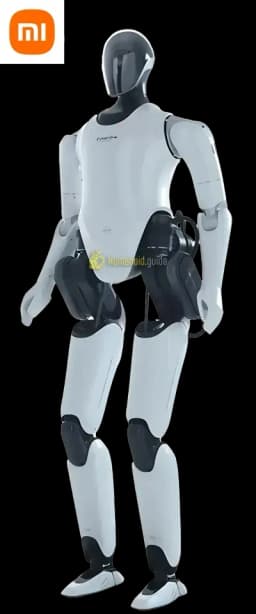
CyberOne
Xiaomi

Reachy 2
Pollen Robotics (Hugging Face)
DNA Fingerprint Overlay
CyberOne Reachy 2
Specifications
Not for sale. A next-generation model (codename 'Tieda') was shown at World Robot Conference on Aug 19-20, 2026 and at IFA Berlin in Sept 2026: ~170 cm, 66 kg, 66 DOF (about half in the hands); running pilot shifts in Xiaomi's EV plant (98% success on self-tapping nut installation). Xiaomi states humanoids are far from large-scale commercialization; no price or mass-production date.Price$70,000
177 cmHeight166 cm
52 kgWeight50 kg
21DOF17
1.5 kgPayload3 kg
—Runtime—
—Speed—
—StairsNo
NoLiDARYes
Xiaomi Mi-Sense depth + custom AI chipComputeSolidrun Bedrock v3000
Ecosystem Openness
—
CyberOne
/100
91
Reachy 2
Fully open-source HW+SW. ROS2. Hugging Face backing. Best-in-class openness.
Pros and cons at a glance
CyberOne
Cons
- Still in development, no commercial availability
- Unit price not publicly disclosed (quote-on-request or enterprise-only)
- Low rated payload (1.5 kg) — research or light-handling tasks only
- Closed software stack — no public SDK or ROS support
Reachy 2
Pros
- Shipping to customers (verified commercial availability)
- Ships with LiDAR for robust depth sensing in low-light environments
Cons
- Low rated payload (3 kg) — research or light-handling tasks only
- Limited articulation (17 DOF)
- Cannot navigate stairs — restricts deployment environments
Frequently asked questions
How do CyberOne and Reachy 2 compare on price?
CyberOne: Not for sale. A next-generation model (codename 'Tieda') was shown at World Robot Conference on Aug 19-20, 2026 and at IFA Berlin in Sept 2026: ~170 cm, 66 kg, 66 DOF (about half in the hands); running pilot shifts in Xiaomi's EV plant (98% success on self-tapping nut installation). Xiaomi states humanoids are far from large-scale commercialization; no price or mass-production date.. Reachy 2: $70,000. Only one of the two has a public unit price; the other publishes a range or enterprise-only terms.
Which has higher payload: CyberOne or Reachy 2?
Reachy 2 rates a higher payload at 3 kg vs 1.5 kg. Payload ratings are vendor claims and do not always include a duty cycle — peak vs sustained payload can differ significantly.
Is CyberOne or Reachy 2 actually available to buy?
CyberOne is in active development without commercial availability. Reachy 2 is shipping to customers. Status reflects the vendor's published commercial position as of the last review and can change between announcement and actual delivery.
Which is better for ROS-based development: CyberOne or Reachy 2?
CyberOne has no ROS support; Reachy 2 has ros2. For research and multi-vendor robotics stacks, native ROS 2 is the strongest signal of ecosystem maturity.
Does CyberOne or Reachy 2 use LiDAR?
Reachy 2 ships with LiDAR for depth sensing; CyberOne does not. LiDAR adds cost and complexity but improves obstacle detection in low-light or low-contrast environments.
Last updated: 2025