Atlas (Electric) vs Optimus Gen 3: Specs, Price & ROS Support Compared (2026)
Boston Dynamics (Hyundai) vs Tesla — independent, side-by-side analysis.
Quick Verdict
Atlas (Electric) leads in more DOF, higher payload, while Optimus Gen 3 leads in longer runtime. Overall, Atlas (Electric) has an edge in 2 out of 3 compared categories.
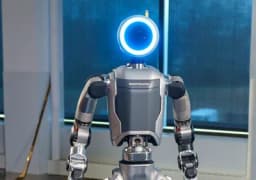
Atlas (Electric)
Boston Dynamics (Hyundai)

Optimus Gen 3
Tesla
DNA Fingerprint Overlay
Atlas (Electric) Optimus Gen 3
Specifications
~$420,000 (enterprise estimate). Not sold openly: early deployments with select customers; Atlas training center at Hyundai Metaplant Georgia operating since Sep 2026, Hyundai plans 25,000 unitsPriceNo official price or pre-orders; Musk target $20,000–$30,000 at scale. V3 not publicly revealed as of Sep 2026; Fremont lines being installed, first units for internal training (Q2 2026 update). Only confirmed V3 hardware figure: 22-DoF hand, 50 actuators total
190 cmHeight168 cm
90 kgWeight55 kg
56DOF50
30 kgPayload25 kg
4hRuntime9h
—Speed2.5 m/s
YesStairsYes
YesLiDARNo
NVIDIA Jetson ThorComputeTesla AI5 custom SoC
Ecosystem Openness
25
Atlas (Electric)
/100
—
Optimus Gen 3
NVIDIA Isaac (ROS2) but limited public access. Mostly enterprise.
Pros and cons at a glance
Atlas (Electric)
Pros
- Shipping to customers (verified commercial availability)
- High rated payload (30 kg) for industrial pick-and-place
- Ships with LiDAR for robust depth sensing in low-light environments
- 56 degrees of freedom — full-body articulation
Cons
- Unit price not publicly disclosed (quote-on-request or enterprise-only)
Optimus Gen 3
Pros
- High rated payload (25 kg) for industrial pick-and-place
- Long runtime (9h per charge) for full-shift operation
- 50 degrees of freedom — full-body articulation
Cons
- Still in development, no commercial availability
- Unit price not publicly disclosed (quote-on-request or enterprise-only)
- Closed software stack — no public SDK or ROS support
Frequently asked questions
How do Atlas (Electric) and Optimus Gen 3 compare on price?
Atlas (Electric): ~$420,000 (enterprise estimate). Not sold openly: early deployments with select customers; Atlas training center at Hyundai Metaplant Georgia operating since Sep 2026, Hyundai plans 25,000 units. Optimus Gen 3: No official price or pre-orders; Musk target $20,000–$30,000 at scale. V3 not publicly revealed as of Sep 2026; Fremont lines being installed, first units for internal training (Q2 2026 update). Only confirmed V3 hardware figure: 22-DoF hand, 50 actuators total.
Which has higher payload: Atlas (Electric) or Optimus Gen 3?
Atlas (Electric) rates a higher payload at 30 kg vs 25 kg. Payload ratings are vendor claims and do not always include a duty cycle — peak vs sustained payload can differ significantly.
Is Atlas (Electric) or Optimus Gen 3 actually available to buy?
Atlas (Electric) is shipping to customers. Optimus Gen 3 is in active development without commercial availability. Status reflects the vendor's published commercial position as of the last review and can change between announcement and actual delivery.
Which is better for ROS-based development: Atlas (Electric) or Optimus Gen 3?
Atlas (Electric) has ros2; Optimus Gen 3 has no ROS support. For research and multi-vendor robotics stacks, native ROS 2 is the strongest signal of ecosystem maturity.
Does Atlas (Electric) or Optimus Gen 3 use LiDAR?
Atlas (Electric) ships with LiDAR for depth sensing; Optimus Gen 3 does not. LiDAR adds cost and complexity but improves obstacle detection in low-light or low-contrast environments.
Last updated: 2026
Related Comparisons
Atlas (Electric) vs Forerunner K1Kepler RoboticsOptimus Gen 3 vs Forerunner K1Kepler RoboticsAtlas (Electric) vs L7RobotEraOptimus Gen 3 vs L7RobotEraAtlas (Electric) vs MenteeBot V3Mentee RoboticsOptimus Gen 3 vs MenteeBot V3Mentee RoboticsAtlas (Electric) vs PhoenixSanctuary AIOptimus Gen 3 vs PhoenixSanctuary AI